BB BRB
|
BB BRB |
WEBSITE UNDER RECONSTRUCTION
—THANK YOU FOR YOUR ATTENTION TO THIS MATTER!
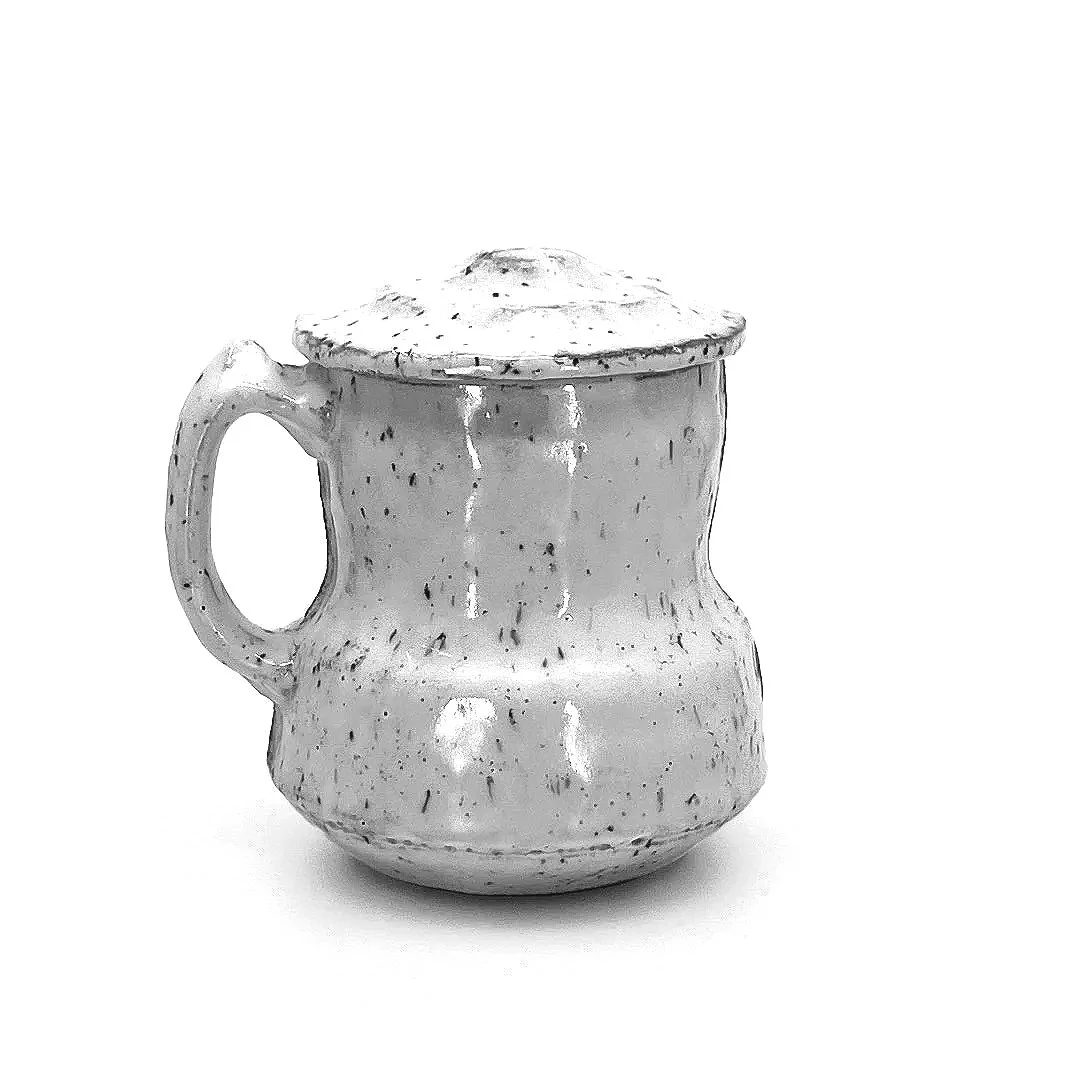
With simply composed, charismatic forms and evocative surfaces, the pots I make address the significance of our everyday domestic experiences in terms of nature and nurture, connection and disconnection, balance and imbalance.
There is meaning in the materials and poetry in the process.
I am prone to select raw ceramic materials and make choices about form and process that generate a holistic framework through which I translate my observations and experiences. Thus, my pots are not only useful objects, they are also subjects that have the ability to affect their users’ sensibilities and to act upon the domestic spaces they occupy.
Thin slabs are challenging because they are prone to warping. Try working with them when they are soft, and the challenge increases. In this video workshop with Birdie, you’ll learn the mechanics of rolling and working with extra thin slabs to make lightweight forms. You’ll also learn how to create soft curves with a rib and a banding wheel, avoid cracking when joining soft clay to leather-hard clay, as well as tips for finishing rims and seams.
I once read that certain monks had an eating habit that restricted the amount of a meal to what would fit into the volume created when both hands were cupped together. I looked down at my own cupped-together hands to see just how much food I could eat were I a monk, and I realized that hands were the original vessels used for consuming sustenance, and that the next best thing would be dishes that fit just so into that curve formed by two hands cupped together. Since then, 'belly-bottomed' dishes have become a significant part of my work.
For several years I’ve been making variations of this plate. It’s a set of 3 elements: the plate face, the girdle, and the foot. The plate size and shape are easy to vary. For this wide and only somewhat flat, heavy-ish plate, elevated on a small-ish foot that’s easily more aesthetic than stable, gravity’s effects are unavoidable. Many flawed attempts have led me to solve for a higher rate of success. Timing, I found, makes all (well, most of) the difference. From wet clay slab to dry greenware plate, each step is best executed at a recommended firmness and this will be noted as needed. I’ll also highlight certain details that need a little extra care and explain why.
Johannes Itten, who developed and taught the first color course at the Bauhaus in the early 1920s, thought of colors as “primordial ideas.” Indeed, one of the reasons color is so powerful is that it can trigger a visceral response that is at once both personal and universal. You don’t need to know glaze chemistry in order to develop color in glazes. Certainly, knowing the chemical properties of a glaze can be helpful for making considered decisions about which colorants to use and which not to bother with, but it isn’t necessary. As you test, you will learn it empirically by looking at the results and seeing how the colorants are reacting in combination with one another as well as how they are reacting to the materials in the glaze recipe.
Today on the Tales of a Red Clay Rambler Podcast I have an interview with Birdie Boone. Working from her studio in Abingdon, VA she creates hand built tableware glazed in rich translucent colors. Her research into rare earth colorants has led to a broad spectrum of colors that are uniquely subtle and emotionally impactful. In our discussion, we talk about the connection between emotion and color, engaging with constructive criticism and working with rare earth colorants.